
Whether you decide to create your own assessment scheme from a blank sheet of paper, so to speak, use a ready-made scheme created by someone else, or do a bit of both, there are 6 questions you need to ask:
Read MoreDigital Education Coding Resources Special
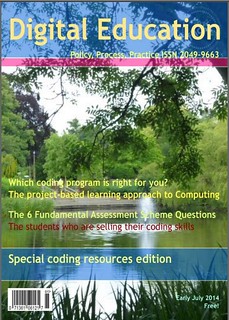 The new edition of Digital Education, the free newsletter for those with a professional interest in educational ICT and Computing, has a special focus on resources you can use to teach coding. Here’s what it contains:
Digital Education–Latest Edition
 This is what the latest version of Digital Education contains, with guest articles by Professor Paul Curzon, Sal McKeown, Geoff Jones and Crispin Weston
TrilbyTV inspires children to achieve life-long success at Stanhope School
 Stanhope Primary School in South Shields has been using TrilbyTV as much more than a teaching aid in their school. It has been used as a tool to inspire their children to believe in themselves and the goals they want to achieve throughout life.
Set in a deprived part of the UK, Stanhope School has to work exceptionally hard to ensure each of their pupils
The Magic of Human-Computer Communication
 Magicians demonstrate that some kinds of human mistake are not down to stupidity or negligence but about how our brains are wired. Computer Scientists have to understand this too but instead engineer systems so no one makes mistakes – especially in critical situations like a hospital. The machines need to help not hinder. Professor Paul Curzon explains...
The (digital) revolution comes to the London Barbican
 Digital Revolution explores and celebrates the transformation of the arts through digital technology since the 1970s. The exhibition brings together for the first time a range of artists, filmmakers, architects, designers, musicians and game developers pushing the boundaries of their fields using digital media. It also looks to the future considering the impact of creative coding, DIY culture, digital communities and the creative possibilities offered by technologies including augmented reality, artificial intelligence, wearable technologies, robotics and 3D printing.
Digital Education June Edition out now!
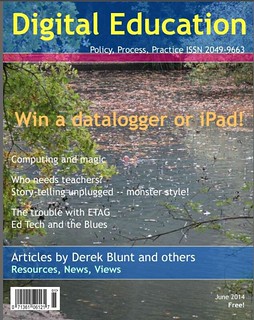 The latest edition of Digital Education is bursting at the seems. There is, I hope, something for everybody. As well as news and commentary, there are lists of resources, evaluated. Plus, guest articles: Professor Paul Curzon considers what programmers can learn from magicians, Sal McKeown asks whether we really need teachers, Crispin Weston suggests what is wrong with the Education Technology Action Group, Geoff Jones points out the dangers of some forms of data collection from parents, and Derek Blunt has a (mild) rant about the demise of the term “teaching”.
There are other articles too, plus a chance to win a Labquest datalogger, and a chance to win a break in Germany, an iPad and other goodies, free entry to an event called Digital Summer Trip, access to a growing list of very useful resources, including the collated articles about the recently-announced Department for Education assessment innovations.
The full list of contents is given below.
Magic, Monsters and Music
 The forthcoming edition of Digital Education contains articles about magic, monsters and music. See? Computing is not all about coding!
Digital Education
 The latest edition of this wonderful publication is out now!
A brief update
Do you know, I hate those self-referntial blog posts in which bloggers talk about their own blogs. So I’m not going to do that; I’m going to talk about my newsletter and a survey instead!
Read MoreThe Story of the Story Wall App: an Apps for Good Success Story
 Emma, 14, describes how she and two friends created the Story Wall app.
The Story Wall was created by me and my classmates Teigan and Joe. We originally came up with the idea to help people with writing stories and how people can get stuck when writing a story. The name was created by thinking how walls and stories are everywhere and how a story could be written on a wall, but the name just came to us and sounded right.
Digital Education
 In case you missed it, the latest issue of Digital Education, the free newsletter for those with a professional interest in educational ICT and Computing, contains some great articles. Here’s a list of the main ones.
Where are the girls in ICT and Computing
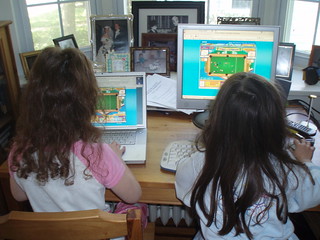 In the context of technology, the main issue is that not enough girls go into computer science studies beyond the statutory provision, or computer-related jobs. Various figures are cited, but it seems to be generally agreed that only around 16 or 17% of students in undergraduate courses in Computer Science in the UK are female, and only around 27 or 28% of employees in information technology jobs are women — a figure that is true for both the UK and the USA. So what can be done about it?
Digital Education Newsletter: some numbers
For colleagues who like pondering data, here are some statistics about the latest issue of Digital Education, the free newsletter for those with a professional interest in educational ICT and Computing…
The latest issue contains:
When it comes to Computing, where are the girls?
“Where are the girls?” is one of the articles in the latest issue of Digital Education, the free newsletter for those with a professional interest in educational ICT and Computing. This article looks at what the issues are and, crucially, offers practical solutions and suggests several resources that you may find useful in this context.
Other articles include:
5 Assessment for Learning techniques for ICT or Computing
 Here are 5 assessment for learning techniques you may wish to try out. They are generic, but I think they are especially useful in the context of Computing and ICT. As well as my own work and experience, I have drawn on
Dylan Wiliam’s book, Embedded Formative Assessment, Black and Wiliam’s Inside the Black Box.
Here are 5 assessment for learning techniques you may wish to try out. They are generic, but I think they are especially useful in the context of Computing and ICT. As well as my own work and experience, I have drawn on
Dylan Wiliam’s book, Embedded Formative Assessment, Black and Wiliam’s Inside the Black Box.Useful ICT and Computing Conferences coming up
 With the new Computing Programme of Study looming on the horizon, there are a number of conferences and other events coming up in the near future. Here’s a list of some of them. The Education Show isn’t specifically about ICT or Computing, but there are seminars in those areas so it’s definitely worth looking at.
Coming soon: another great article
Well, I think it’s great, cos I’m writing it! But while you’re waiting for my latest work to be bashed out crafted, why not read the articles penned by recent contributors to Digital Education. Here they are:
Read MoreThe education research problem
Independent consultant and self-confessed “controversialist” Crispin Weston offers a personal view of the current educational technology landscape, and what needs to be done to transform it.Modern research still confirms the vital importance of students receiving timely, actionable feedback, the essence of “dialogic” teaching. But the amount of such personalised feedback in most schools and colleges is extremely limited.
Read More15 reasons to read the latest issue of Digital Education. I really like #13 myself!
 Subscribe to Digital Education, and get this sort of wonderful content without hassle! Here’s what is contained in the current issue.