
A new report from Pew Internet.
Read MoreThe Digital Education newsletter sign-up buttons: a salutary story
The sign-up buttons for the Digital Education newsletter have been in place for ages. So why was there a sudden drop in subscriptions?
Read More10 good resources and 2 competitions for ICT and Computing teachers
Discussion lists, blog posts, teachers' guides and competitions are all featured in today's article.
Read MoreFinishing touches →
People really do judge by appearances. (If you don’t believe me, try turning up to your next job interview wearing wellingtons and a pair of shorts.)
Read MoreHow I got into coding and why I think everyone should do it!
"As soon as I found out about how to write code, I was hooked. I realised that this was what I should have been doing all along." Anna Shipman, who works for the Government Digital Service, talks about her love of coding.
Read MoreWe’re moving to a mobile-friendly template
 I’m in the process of changing this website to a mobile-friendly version. With any luck, this website won’t disappear in the meantime. If you do happen to get one of those horrible “Page not found” messages, please keep trying. Apparently it can take up to 72 hours for it all to come to life again.
Ada Lovelace Day Competition
As you may be aware, next Tuesday (13th October) is Ada Lovelace Day. In my next newsletter I’ll be announcing details of a competition whereby three lucky readers can win a copy of The Thrilling Adventures of Lovelace and Babbage, by Sydney Padua.
Read MoreICT and Computing Reading catch-up
 Greetings! I hope you have had a nice summer break. I’ve taken some time off, in the sense of not trying to update this website as frequently as I usually do. But I was doing some reading and writing, so I thought you may find these links interesting as you start a new school year.
Believe it or not, I started this post a week ago. It’s not that I’m a slow writer (I’m not), but I kept thinking “Ooh, that would be interesting to include” and “Ooh, that looks good too”. well, after a lot of “ooh-ing” I thought “Ooh, I’d better stop and hit the Publish button”. Just as well, because one of the conferences I mention is tomorrow – eeek! Anyway, now even this intro has started to take on a life of its own, so I’m going to stop right now. There. See? It’s just a question of self-discipline.
The wiki train timetable
 Imagine a train timetable catalogue created along the same lines as Wikipedia. This is how it might work.
7 questions to ask regarding whether education technology improves learning
 Does education technology improve learning? The intuitive answer to those of us involved in education technology is “of course it does”. However, the evidence from research is not conclusive. I think the reason is that it’s actually very difficult to carry out robust research in this area. As the impact of education technology has often been a topic for discussion in the Naace and Mirandanet mailing lists, I thought it might be useful to try and clarify the issues as I see them.
7 reasons not to swear in blogs
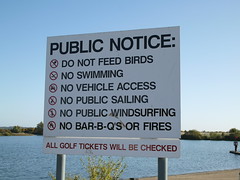 It seems to be depressingly more and more likely to find that a blog article which looks promising is peppered with swear words – or one particular swear word that is repeated ad nauseum. I think that writers of such blog posts are making a grave error. Here are my reasons.
Review of the Association for Information Technology in Teacher Education (ITTE) Conference
 ITTE held its annual conference recently, and I bought a ticket and went along. As far as the ITTE conference is concerned, I was a newbie, and so I wasn’t sure what to expect. I do recall dragging my carcass to the local station in sweltering heat, mumbling to myself something along the lines of “Please let the trains be cancelled; I’d rather be in the garden.” Well, that proved too much for Transport for London to arrange, and so I made it to the conference.
Digital Education ezine July edition now available!
 I don’t know what the opposite of “bumper” is (as in “stupendous, 200 page bumper edition”), but the latest issue of Digital Education is small – but perfectly formed. Here’s what it contains:
7 reasons that the FAIL acronym fails
 It is fashionable these days to avoid the ‘F’ word – by which, of course, I mean “Fail”. This is not confined to the area of teaching Computing, but enough people in this field have written about it to nudge me into writing my thoughts on the matter. So, the FAIL acronym, in case you haven’t come across it, is First Attempt In Learning. The idea of it is that instead of telling kids that they have failed at something, you tell that they have not failed. They may have not succeeded, but that is fine, because it was a First Attempt In Learning. Well, I have always been a believer in telling it how it is, and so for me the FAIL acronym does not benefit kids at all. Quite the opposite in fact. Here are my objections:
Some interesting-looking computing conferences coming up
There are several conferences coming up in computing, ICT and education technology. If you’re not careful, you could spend all your time and money going to conferences without getting any actual work done! Still, I do think it’s worth going to two or three a year if you can persuade the powers-that-be that it’s in their interests to allow you to attend. So, here’s the current listing. I’m not saying it’s a definitive list, just the ones I know about.
Read MoreInspiration for students of Computing (and other subjects)
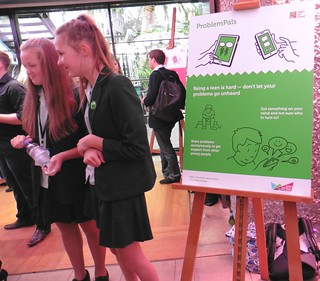 I attended the Apps for Good Awards last night. Very inspiring it was too. As always, the young people were very impressive. Whatever question I threw at them, they were able to answer it. But for now at least, I just wanted to repeat something that the co-CEO of Apps for Good, Debbie Forster, said at the end of the evening.
The Big Ten Educators
 Technology and Learning over in the USA has published a list of its choice of the top ten people in education. The list makes for interesting reading.
Everyone’s an educational expert, but it was ever thus
 Have you noticed how everybody seems to be an expert on education these days? In fact, you only have to pick up a newspaper more or less any day of the week to find some minor celebrity saying something asinine like “Schools should teach kids how to stay safe online” (Really? What a great idea. How come we didn’t think of that?!). I don’t take much notice of these people, but it does annoy me when they somehow get on to conference programmes.
7 questions to ask about big name speakers at education technology conferences
 I enjoy a good keynote, especially if it “delivers”. To my mind, a keynote should be informative, inspirational and entertaining. All too often, however, keynotes by so-called “visionary” speakers leave me feeling both uninspired and uninformed. I am left with having been entertained, which is all very well, but unless it’s an after-dinner speech I’m also left feeling cheated. So these days, where there is a choice between attending a celebrity speaker’s talk or that of an “ordinary” teacher who is doing great stuff in his or her classroom, I will almost always choose the latter. In fact, I have developed a kind of rubric that I follow when deciding whether or not to attend a celebrity presentation. It consists of a number of questions, which I’ve written up below. Feel free to use them if you think they are useful. Some of these questions cannot be answered until you have attended a talk given by the person in question. But you will know for next time.
Girls and Computing
 This is the first of three articles about girls and women in Computing.
On March 8th it was International Women's Day.