

Although this book is over 60 years old, it is remarkably apposite for our times -- and especially in the fields of educational research and assessing pupils' understanding and progress.
Read More
What I've been reading: Teacher Proof, by Tom Bennett
Tom Bennett's book Teacher Proof is, like the curate's egg, excellent in parts. Many of the practices that teachers are encouraged to do have no basis in research (or even common sense, if you ask me). In this book, the founder of ResearchEd takes issue with such matters.
Read More
"If you're not one up, you're one down" Photo by Valerie Everett
What I've been reading: The "Upmanship" books
The "upmanship" books of Stephen Potter took a tongue-in-cheek view of education, amongst other things. Although he was writing a generation ago, there is still much in what he wrote to make us smile today.
Read More
Perfect ICT Every Lesson
What I've been reading: Perfect ICT Every Lesson
Perfect ICT every lesson? It's an ambitious title. Does the content deliver the promise though?
Read More
Remember these?
7 Books for Computing teachers
As it's World Book Day, what are my recommendations for books for teachers of Computing? This is by no means a definitive list -- think of it more as a starter.
Read MoreWhat I've been reading: Delete
We live in an age where it's impossible to forget anything. Is this a good thing?
Read MoreWhat I've been reading
A must-read for anyone who has taught in "challenging" schools!
Read MoreWhat I've been reading
Some educational research books are better written than others. "Making a difference in education" is one of them.
Read More
Review of Thinking Allowed on Schooling
Thinking Allowed is a godsend to all those people in education who think that many of the policies and ways of doing things don't really work, but are not really in a position to say so.
Read More
Books for teachers of Computing and ICT
News about the ever-expanding Books Recommendations page on the ICT & Computing in Education website. This complements the book reviews that I publish fairly regluarly.
Read MoreBook review: Don’t Change the Lightbulbs
This book collects together the thoughts and observations of over 71 people in education. These are each a little longer than the bite-sized comments typical of Twitter – I understand that they were curated from Google+ discussions. Being longer than 140 characters makes them "meaty" without being too long.
Read MoreIn total around 70 topics are covered, not all of them curricular.
Book Review: The Thrilling Adventures of Lovelace and Babbage
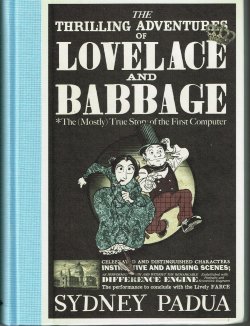 Ada Lovelace died young, at the age of 36, and Charles Babbage never built his Analytical Engine. Had Lovelace lived, and had Babbage actually built his invention, the computer would have been invented a hundred years before it was.
Isn't that an astonishing thought?!
Book Review: Exploring a world of Brown Dogs and Barbers
By Roger Davies
Read More Have you ever studied Computer Science? If not, teacher Roger Davies, who teaches at Queen Elizabeth School, Kirkby Lonsdale, Cumbria urges you to read a wonderful new book.
Lovelace, Babbage and Me
 What’s the connection between Ada Lovelace, Charles Babbage, and me? Well, it’s a bit tenuous. Apart from the obvious, that we all liked computing (in effect), it is that they appear in a new graphic novel, and I love graphic novels.
The Thrilling Adventures of Lovelace and Babbage: The Book
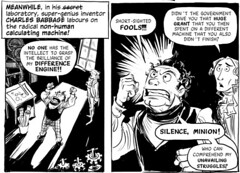 If, like me, you enjoy reading comics and graphic novels, and are interested in Computing, you may already be familiar with the blog called 2D Goggles Or The Thrilling Adventures of Lovelace and Babbage. This relates the story of the development of the Difference Engine and other aspects of the lives of Ada Lovelace and Charles Babbage. Their adventures are based on (mostly) real events and episodes, with a lot of poetic licence thrown in! I thoroughly recommend reading the adventures, and I suggest encouraging your students to do so too. It will help them learn about the development of computing and computer programming in an enjoyable way.
Review of Business for Authors
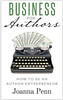 You might think that a book about making money from your writing other than from royalties has nothing much to do with teaching Computing, but it definitely has, for a number of reasons.
Review of Computing Without Computers
This free book by Paul Curzon (yes, the one who wrote The Magic of Human-Computer Communication), attempts to explain programming in non-technical language. I’ve looked at similar books designed for students, and they were not as good as this one. So what makes this one so great?
Read MoreReview of The Thinking Teacher
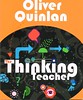 When I first picked up this book I made an error of judgement. Noticing that it seemed quite slim, I thought I could finish reading it in just one or two sessions. However, what I had not counted on was the book’s living up to its title. In short, it made me think. It made me think about what the author was saying in its own right, that is whether or not I agreed with it. It also caused me to reflect on my own practice as a teacher and, now, as a consultant.
Book review: Two girls, one on each knee (7)
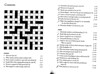 You could argue that crossword solving is a very good example of computational thinking. That is certainly what the security services thought during WW2 when they asked The Times to send them the names of anyone who could solve a cryptic crossword they’d supplied in 12 minutes or less. Those that did were invited to work at Bletchley Park, cracking codes for the war effort.
What are your top tips for ebook cover design?
I'm in the process of collating top tips and resources about this topic. I've compiled a list of useful links (see below), which I'm adding to continually, but if you have any advice based on experience it would be interesting to hear about it.
Read More