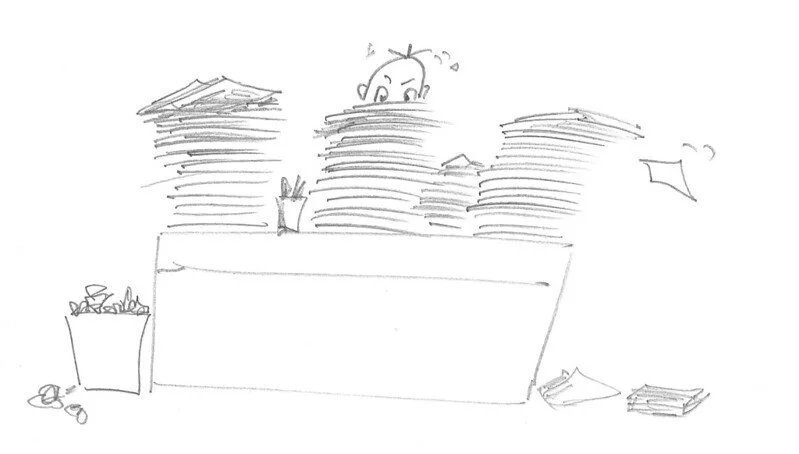
An article in New scientist caught my eye recently. Entitled “The sneaky trick for solving problems without answering them”, Jacob Aron describes a mathematical approach to solving a problem without actually doing anything about it. All you have to do is see that it can be solved.
I have to say, I could have done with knowing about this when I was at school, where we had to answer questions like, Sam is five years older than Freda who is twice as old as Jan. How old is John? Or something like that. Anyway, the not-actually-doing-anything approach is known as “non-constructive proof”, and is best exemplified by a joke.
A person walks into a room and sees that it is on fire. She looks around and spots a fire extinguisher in the corner. Realising that the fire is able to be tackled, she goes out of the room and carries on with her day.
I have to say, it reminds me of the old joke about economists and their unrealistic assumptions. An economist, a physicist and a chemist are stranded on a desert island. They have plenty of tinned food but no tin opener. The physicist cuts down a few branches of a palm tree and constructs a makeshift catapult, which he uses to hurl the tins against some rocks. The ruse fails. Then the chemist tries to dissolve the metal by soaking the tins in salt water taken from the sea. To no avail. All this time, the economist has been sitting there with a smug look on his face. “You’re looking quite pleased with yourself” says the physicist. “what’s your solution then?”
“Let’s assume we have a tin opener” he replies.
I realised that I’d been using this approach for years. I’ve always loved working out how I could solve a particular problem using either a ready-made program, like MS Access, say, computer programing, or an amalgamation of the two, such as using VBA in a Word document. Once I’ve worked out how it could be done, I haven’t seen the need — or had the desire — to actually do it. This non-constructive business sounds like the same approach to me.
“Hard hats not just graduation caps”
Britain’s new Prime Minister, Andy Burnham, has announced that schools are to offer technical education from the age of 14. One of the problems of being as old as I am is that I remember the last time this sort of thing was done. And the time before that. And….
Don’t get me wrong, I’m all in favour of it. Not everyone is academically inclined, and neither is everyone technically inclined. I was marvelling today at a CD cabinet (see photo) that my father-in-law made. It’s perfect, and it was made without any written specifications.
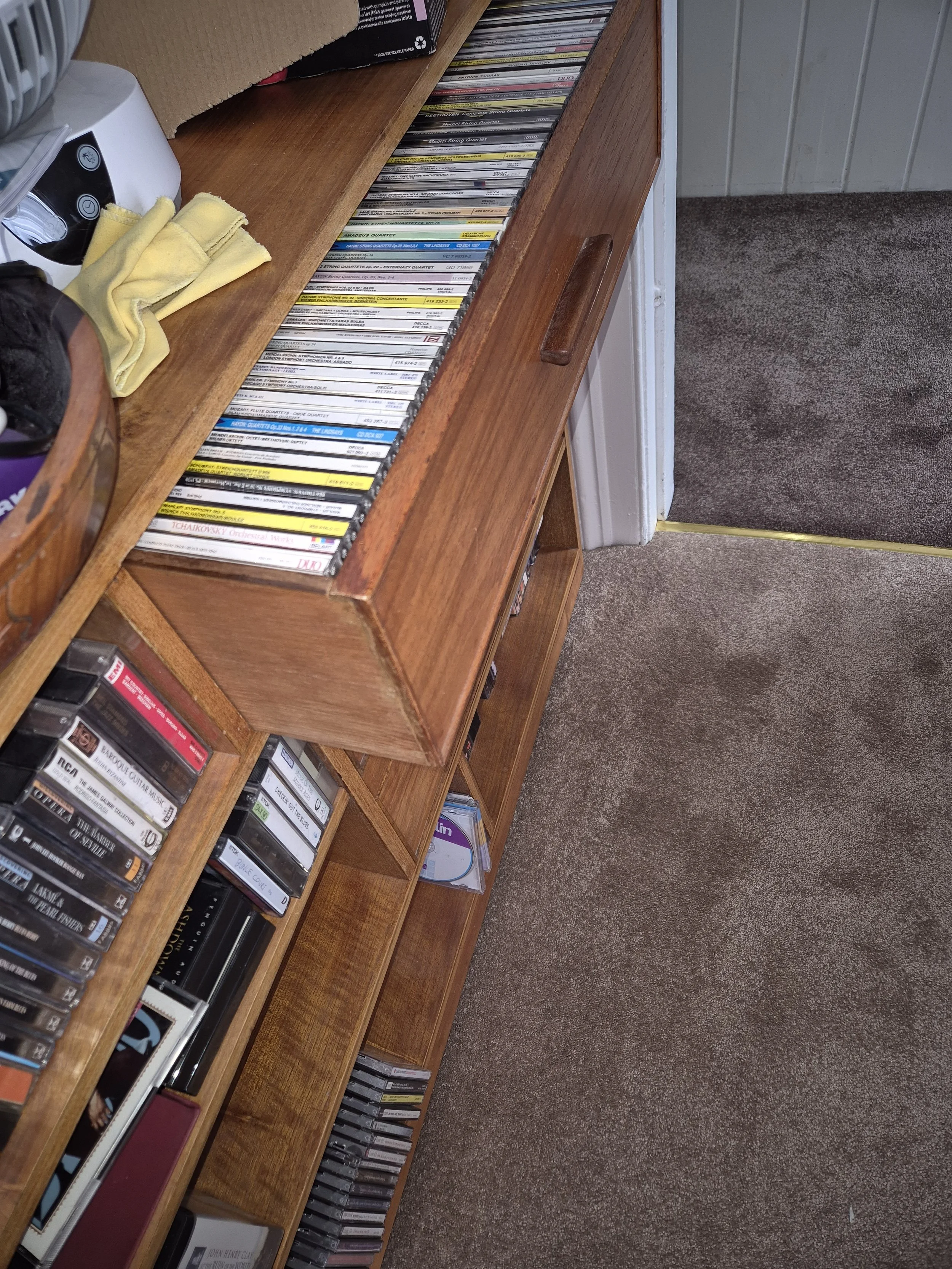
cd cabinet; photo by Terry Freedman
Compare that with me. At the age of 15 I was banned from the woodwork room in school by the head of department, Mr Cleaver (how’s THAT for an example of nominative determinism?). Why? Because while one of the achievements of another (admittedly older) lad had been to make a guitar, my crowning achievement was to cut a piece of wood, shape into a wedge, and glue it to a block of wood on which I had drawn two eyes and a month.
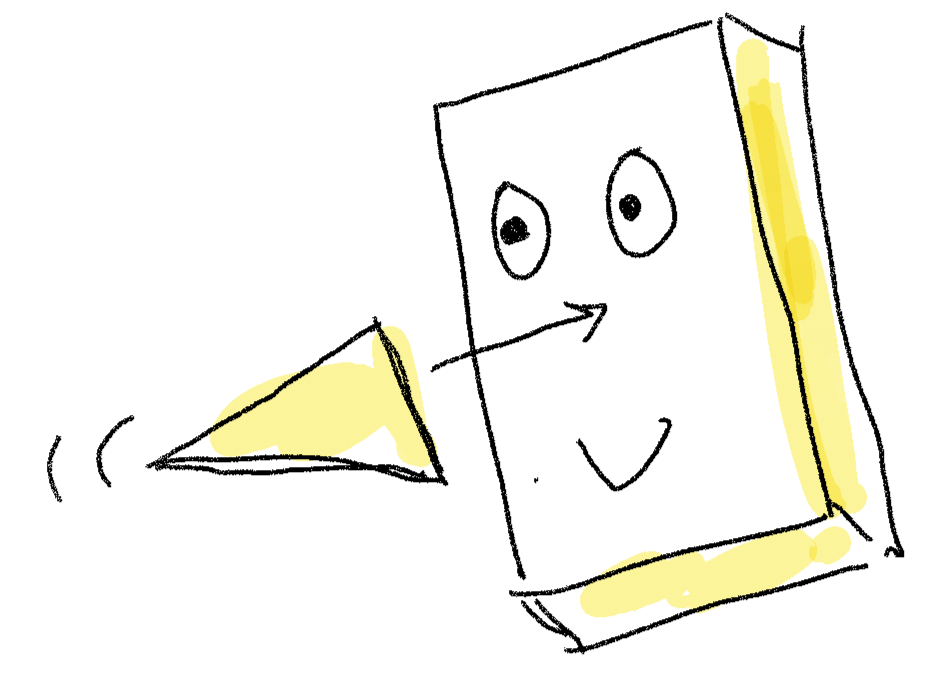
my woodwork, by Terry Freedman
No, my frustration is that we seem to go on and on reinventing the same wheel, abandoning it, and then inventing it again, ad nauseam. During my teaching career I’ve seen these initiatives come and go several times. This version sounds very like the Diploma, a mixture of theory and practical study that involved visits to organisations and working in or with local businesses. That was a great scheme. Of course, there are a few minor details to be sorted out, such as who is going to teach it, and when? Will music and languages go by the board, for example? Will the school day be doubled in length? Anyway, I shall reserve my cynicism for now, and wish this new scheme good luck.
This article about technical education first appeared in my free newsletter, Digital Education. Also in that edition: news about an AI petition, and Andy Burnham’s AI and technology-related reorganisations.