
Spotting the unexpected results of mock exams of scores or even hundreds of students need no longer be a nightmare.
Read MoreLevels in Computing? I thought they'd gone!
Updated! When it comes to assessing ICT and Computing, it's worth pointing out that "solutions" which look both comprehensive and easy to implement are not necessary either, when you start to get down to considering them in depth.
Read MoreAn interview concerning the scrapping of ICT
Kay Sawbridge, Faculty Leader of Computing and ICT in a secondary school, has been very active in campaigning against the Government's decision to scrap ICT qualifications. It's a bad decision that could leave thousands of students "disenfranchised" in terms of what they choose to study, and will almost certainly adversely affect a disproportionate number of girls.
In this article, taken from the next issue of the Digital Education newsletter, I interview Kay.
Read More7 Ways to make IT real: 6 Use what you have
Make use of what you already have.
What you have, in fact, is your pupils and other members of staff. Even if you are in a small school, or a large school but with no team, you may still be able to give your pupils the experience of addressing real problems through computing and ICT.
Read More
Fiction and computational thinking
Fiction and computational thinking go together in my opinion. Fiction presents exciting possibilities for teachers and students of computing.
Read More
If the decision to scrap ICT qualifications has left you feeling frazzled, read on.
Approved ICT and Computing qualifications
UPDATED yet again! The decision to "scrap" the GCSE and 'A' level qualifications in Information and Communication Technology have dismayed a lot of people. In a spirit of pragmatism rather than defeatism, I've compiled a list of eligible alternative qualifications, which you can download from here.
Read More
Open badges in a nutshell. (c) @bryanMMathers. Used with permission through a CC-BY-ND licence.
Personalising Computing assessment with badges
The attractive thing about badges is that a school can invent their own categories and achievement levels.
Read More10 good resources and 2 competitions for ICT and Computing teachers
Discussion lists, blog posts, teachers' guides and competitions are all featured in today's article.
Read More
Communities are important!
3 ICT and Computing communities you should join
Three communities that ICT and Computing teachers should join.
Read More5 reasons to join Computing communities
 Teaching can be a lonely profession, especially if, as is often the case, you are the sole teacher of ICT or Computing in your school. Whether you’re on your own or part of a team, I’d thoroughly recommend joining a community or several. Why?
Pupils don't always benefit from doing it themselves
We all know and love the concept of learning by doing. Because of that, many teachers get pupils to type out a program, create a Scratch program or populate a spreadsheet or database themselves. However, there are a number of problems that can arise from this approach.
Read MoreMaking the flipped classroom work
 The principle of the flipped classroom — that kids learn the content at home and discuss and work with it in school — is something that many teachers would probably agree with. But there are problems with the “pure” model of flipping the classroom, and so we need to be able to compromise.
7 Ways to make IT real
I've always been a great advocate of what I call "authentic" learning, ie giving pupils a reason to actually do something. (I think that stems from my time at school, when I was forced to do mathematical exercises ad nauseum with no perceptible point to them!)
A couple of years ago I wrote a short series of articles called "7 ways to make IT real". As it happens, there were 8 articles in that series, thereby proving that all those years of my being made to do maths exercises were a complete waste of time....
Professional judgement in assessing Computing

“OK, then. What do you think about this?”
I was talking to the delegates on a course I was running entitled Assessing Computing. We were discussing sources of evidence of pupils having learnt stuff.
“What if you took the view: I’m a professional, and I’ll know it when I see it?”
The reactions of the class were very interesting.
Flash fiction and computing
 I’ve been trawling through the archives, and came across the following article. If you missed it the first time around, here’s a chance to read it. If you read it when it was first published, well here’s your chance to enjoy it again!
It’s about flash fiction, and how it can help teach ICT – don’t be put off by the old-fashioned terminology: it all still applies to the new computing curriculum.
7 Expectations for Computing lessons
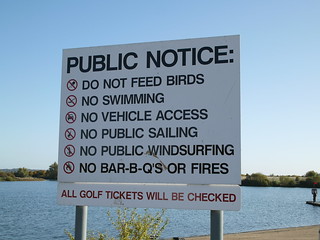 I don’t think rules, as commonly formulated, are very useful in the context of Computing lessons. Rules are usually framed in the negative. For example, in a computer lab I went into a few years ago on one of my school visits, there was a poster on the door listing all the things that people shouldn’t do:
Do not leave the computers on.
Do not leave printing next to the computers.
Do not just switch the computers off.
and so on.
There are two main problems with this sort of thing.
6 routines for Computing lessons
 I mentioned recently that in his book The Craft of the Classroom)
 , Michael Marland provided very useful advice on very practical issues in the classroom, and good routines to ensure a smooth lesson. Routines are good, because pupils know what to expect. They are able to predict what is going to happen, and when. Some pupils, whose home lives are chaotic and unpredictable, may even feel safe because of routines. Here are some routines that I think are useful for Computing lessons.
Assessing Information Technology in 1995
 Just in case you thought the difficulties of assessing pupils’ attainment in Information Technology are a new thing, and how terrible Levels were (are?), I thought you might like to read a report dating from 1995.
Blasts from our ICT Past
 I’ve been trawling through the archives again (I don’t get out much). The following appeared in the very first edition of my newsletter, which was originally called Computers in Classrooms (but is now called Digital Education), on 3rd April 2000:
Book Review: Exploring a world of Brown Dogs and Barbers
By Roger Davies
Read More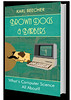 Have you ever studied Computer Science? If not, teacher Roger Davies, who teaches at Queen Elizabeth School, Kirkby Lonsdale, Cumbria urges you to read a wonderful new book.