
 I had the privilege of meeting, for the first time, Julia Skinner at the recent BETT show. Julia tweets as @theheadsoffice, and is the instigator of the 100 Word Challenge, which has been instrumental in encouraging many pupils to engage in, and enjoy, writing.
David Mitchell talks about Quadblogging and February 29

I had the pleasure of finally meeting up with David Mitchell, aka @deputymitchell. David is the brains behind Quadblogging, in which schools form groups of four in order to – well, I’ll let David explain it in his own words. In this video he talks about how the project originated, and how to get involved if you’d like to join in.
3D at Oakington Manor Primary School
By Ophelia Vanderpuye
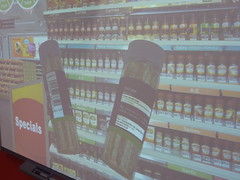 In 2006 following a visit to China by the school’s headteacher and ICT Advanced Skills Teacher, discussions took place about the possibility of building a new ICT suite as the then suite had become too small for the growing children. In the years that followed plans and visits to new build schools to give inspiration for the design of the new building In 2009, we took a bold leap into the unknown as our discussion with our architect and ICT suppliers started to show a design that was totally different to anything we had seen in the schools we visited.
Educating in the Third Dimension
By Graham Quince
 Firstly a bit of a confession, I’m not a fan of 3D. I honestly don’t think it adds anything to the movie experience. Plot makes a movie worth watching, not 50ft robots smashing debris into the audience. I’m not in the minority either, ticket sales keep proving most people aren’t interested in sitting for 2 hours to watch a theme park attraction. I first saw modern 3D in the Terminator 2 show at Universal Studios. It blew me away. It was amazing. It was 10 minutes long and things kept jumping out from the screen. And that’s my point, 3D is a gimmick. It’s very cool, but like a rollercoaster, it works best in short doses.
The 3D Landscape
 Recent changes in the 3D technology landscape are transforming the way we visualise and interact with 3D data and the real world. 3D applications and technologies have reached a level of maturity that are starting to add a real value to the education sector. Inition brings over 10 years experience of integrating 3D technologies alongside expert consulting and training services. We asked them to outline a few of their examples, from 3D displays through to scanning, 3D printing, motion capture and haptic interfaces.
Digital literacy and Computer Science
 Computer studies and its main component, programming, could be an exciting new addition to the curriculum. However, we must not repeat the mistakes of the 1980s, when the subject was, at least in my experience and in my opinion, insular, highly technical, and rightly perceived by some (especially girls) as “geeky”.
Educational Technology: Unofficial BETT Guide, a reminder
Developments in Education Technology: Reflections on the first day of BETT
For me, the day can best be characterised as one of mixed feelings and divided loyalties. To be sure, there was all the excitement and adrelain-inducing "buzz" for which BETT is noted, and why it ought to be prescribed on the National Health Service as a cure for "the blues", but the experience was not one of unadulterated pleasure.
Read MoreDevelopments in Eduucation Technology: Reflections on the first day of BETT
For me, the day can best be characterised as one of mixed feelings and divided loyalties. To be sure, there was all the excitement and adrelain-inducing "buzz" for which BETT is noted, and why it ought to be prescribed on the National Health Service as a cure for "the blues", but the experience was not one of unadulterated pleasure.
Read Moree-Safety and cyberbullying news
 What’s happening in the world of e-safety, especially in the UK? Here are some interesting items from the November 2010 issue of Computers in Classrooms, the free e-newsletter for those with a professional interest in educational ICT. The items include:
- Research into types of bullying;
- Research into technology and behaviour;
- The Beat Bullying website; and
- Safer Internet Day and a competition from Childnet.
Evaluating students’ blogs: so what?
 I’ve been skimming through Silvia Tolisano’s series on student blogging. I emphasise “skimming” because she may have addressed the issues I raise below without my being aware of it.
3 Posts every ICT Co-ordinator should read
 Here are a few important blog posts I think all ICT Co-ordinators should read, because, quite simply, they make you think.
What do walls mean to you?
Here's a nice blast from the (not-too-distant) past:
A Bullet Point Mentality
The bullet points or the short video have to come at the end of the learning process, not the beginning. Bullet points at the beginning are a substitute for understanding rather than an expression of it.
Read More8 Observations on flipping the classroom
 One of the more unfortunate buzzwords to appear in online education circles and the press is “flipping the classroom”. This means that instead of lecturing students in lessons in school, the teacher records the lecture as a video and uploads it to YouTube – or recommends other people’s videos to the students. The students watch the videos for homework, freeing up the lesson for interactivity, project work and so on.
I not impressed with this brilliant “new” idea. Why not?
What young people can do, and why it's relevant to ICT
In case you missed it...
Nearly two years ago now I wrote an article here called What young people can do, and 7 implications of that.
I think its central points are still relevant, and I hope you agree and find the article useful and interesting.
4 Ways to come up with innovative ideas for teaching education technology
 To borrow from Dr Johnson, I find that most innovative ideas in ICT I read about are both new and exciting. Unfortunately, the ones that are new are not exciting, and the ones that are exciting are not new. It’s all very well “pushing the boundaries”, but all that does is give you more of the same.
In my opinion there are four main ways of generating ideas that are both genuinely new and genuinely exciting. Here they are.
Five Funky Flickr Tools
Keep IT clean!
 Yeccchhh!!!! That was my reaction every time I saw a colleague’s keyboard. Never mind the fact that there are more germs on the average keyboard than on an average toilet seat apparently, and that other people had to use this bloke’s computer occasionally. Even worse was the fact that he was a member of my team!
Two cheers for location tagging
 In a recent post on his blog, Neil Adam discusses the idea of everyday items being connected to, or at least known about by, the internet. He also considers the fact that the whereabouts of things like clothing can already be tracked over the internet courtesy of technology such as RFID tags.