 Starting very soon is a 5 week online course called Crafting the perfect eTextbook. I’m slightly biased, because I’m involved in it, but it is shaping up to be really great.
The syllabus consists of, in brief:
 Starting very soon is a 5 week online course called Crafting the perfect eTextbook. I’m slightly biased, because I’m involved in it, but it is shaping up to be really great.
The syllabus consists of, in brief:
 My annual guide to Getting the Best out of BETT is pretty much complete. I’m just waiting for one more item to be sent to me, and then it’s all systems go. I’ll be making it available to subscribers to our newsletter first, and then more widely. In the meantime, I thought I’d publish a few extracts from it. These extracts are just a small sample: there are over 150 suggestions altogether
 It was when my wireless router told me that there was no printer on the network that I finally flipped.
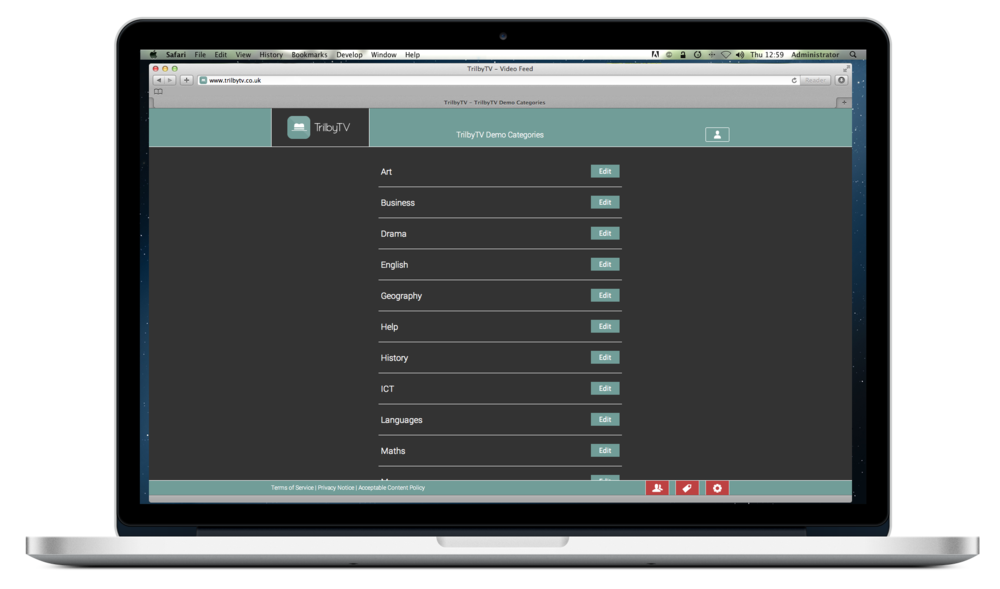 Sponsored article. Many schools across the country have invested in tablet technology, but are they using them to their full potential? Research indicates that used correctly, tablets are fantastic learning tools and can really inspire students and aid teaching. A potential barrier to tablet technology being fully utilised in schools is the complexity of storing and moving work and sharing finished pieces between students and staff.
 Here’s a little tip for you: don’t upload stuff at past midnight, especially if you’re running on adrenalin and strong tea.
 I have a confession to make. You see, it’s like this, officer. I can never remember what WALT and WILF stand for. I know they’re acronyms to do with assessment for learning, but I can never recall what the letters stand for.
But it’s worse than that, your honour. I don’t even care.
 John Donne wrote that no man is an island; he might have said the same thing about schools. Many schools have a mindset perhaps best described as “splendid isolation” – except that there is nothing splendid about it. In fact, in many cases it is just plain daft. Here are my reasons for saying so.
 This article considers the need for computing and ICT to be taught by experts in those subjects. Anything less simply will not do.
Hi, Richard Smith here from Igloo in Education. I am delighted to have been asked by Terry to do a guest blog post on the 3D print show that took place in London from 7-9th November.
The venue of the event, the Business Design Centre in Islington, sent out a clear message out to visitors: 3D printing should be about innovative design and the encouragement of original business ideas. Of
 What does it mean to be a maverick? To me, it means not going along with the general consensus about something, just because it’s a consensus. There is always a natural tendency to think “all those people can’t be wrong”, or “there’s no smoke without fire”, but in fact all those people could be wrong and there could be smoke without fire. (Think, for a moment, of all the vilified minority groups throughout history and throughout the world about whom all sorts of ridiculous and terribel things were believed by the majority.)
 British Gas and I go back a long way. For years they have provided me with heating and hot water, and until relatively recently with energy for cooking too. I won’t say it’s all been smooth running. For example, there was the time when they threatened to get the bailiffs round to my flat in order to read the meter that they had removed the week before. But on the whole they’ve been alright. I daresay were it not for the customary British reserve we’d be on first name terms by now. I’d write letters beginning,
“Dear British”
and go on to say how pleased I am to receive the latest bill and how much pleasure I have in enclosing payment.
 I’ve been thinking for some time that I really ought to write an article every so often about blogs I like reading, or that have recently sprung up or come to my attention. I thought I’d get the ball rolling with “nhowie: Musing mainly about ICT in K-12 education”.
It's been a busy period conference-wise. In the near future I hope to report on all of them: dealing with the new Computing Programme of Study, dealing with data and Ofsted, an RM Apple day and the awe-inspiring Apps World 2013.
 Who’s afraid of life without Levels? Quite a few people if the number of schemes of work and assessment grids being developed that incorporate levels are anything to go by. Working without levels is clearly very hard: it is almost impossible to think, much less talk, about pupils’ progress without mentioning levels at some stage.
Yet this is precisely what the government expects.

It ain’t what you do, it’s the way that you do it.
That well-known expression applies as much to running an ed tech project successfully as to anything else. In other words, for an ed tech project to succeed, you need to think about more than just the technology, or even the pedagogy. You have to think about management as well.
(c) Terry Freedman All Rights Reserved