
 I have never met a teacher who enjoys writing reports. If you have one or two small groups, it’s not too bad, but if you have ten different groups of thirty kids, crunching out 300 reports is a bind. And, often, a pressured bind at that, shoehorned between exam results and end of term. But with any luck, a new breed of software could spell the end of such drudgery.
Blogging on February 29 2012
 I’ve always felt a bit sorry for the people whose birthday falls on February 29th – it must be terrible, for example, on your 28th birthday to be given presents suitable for a four-year old. Seriously, though, it must be a bit depressing to have the chance to celebrate your birthday on the proper date only every four years. But this leap year, they can celebrate in style, with a blog post!
Internet addiction: another flawed study
 You’d think people would have better things to do than do pointless surveys from which they then draw unlikely conclusions. Still, it keeps them out of mischief I suppose.
What I did over half-term
 As there are no doubts hundreds (maybe even thousands) of school children bent over laptops writing about what they did over half-term, I thought I might as well join them. I should love to be able to report that I accomplished what I’d set out to do, which was absolutely nothing. I reckoned that as most of the country’s teachers were (supposedly) having a break, I could do so too. Unfortunately, a malignant Fate, to use Dornford Yates’ wonderful phrase, decreed otherwise.
Computer Science courses should be left to the experts: teachers
 It’s astonishing how everyone is an expert on school education these days. Everyone, that is, except the people who actually work in and with schools. The latest half-baked idea appeared in the BETT opening speech by Michael Gove, the Education Secretary for England & Wales. Here’s what he said:
Universities, businesses and others will have the opportunity to devise new courses and exams. In particular, we want to see universities and businesses create new high quality Computer Science GCSEs, and develop curricula encouraging schools to make use of the brilliant Computer Science content available on the web.
This is a dreadful idea for several reasons.
Digital Learning Day
Read some of the highlights from the recently-held Digital Learning Day in the USA. I haven’t fully explored all these myself, but they look promising!
Read MoreAn interview with Julia Skinner
 I had the privilege of meeting, for the first time, Julia Skinner at the recent BETT show. Julia tweets as @theheadsoffice, and is the instigator of the 100 Word Challenge, which has been instrumental in encouraging many pupils to engage in, and enjoy, writing.
Can an ICT curriculum be boring?
Oscar Wilde said that art reflects the viewer rather than the artist. Does the same not apply to curricula?
Read MoreTwo changes to the ICT in Education website
I’ve made two changes to the ICT in Education website, and if you have feedback about them, please let me know.
Read MoreThe BETT Show from a Canadian’s perspective: an interview with Vincent Jansen

BETT 2012 Round-up
 I thought it might be interesting to collate some of the blog posts that have been written about BETT 2012, before it recedes into a distant memory. First, though, here’s a Wordle of the trends that people who responded to my BETT survey spotted. I haven’t edited the text, so there are some superfluous words, like “see”.
3D and haptics in education
 Unless you’ve been walking around with a bucket over your head for the past year or three, you must have noticed that 3D is definitely the “in” thing. It’s almost de rigueur for new movies to be in 3D, and there is even at least one smartphone which has a 3D display. But what about educational applications?
Blogs by Plymouth Students
 I’m always looking for new blogs to read. It’s always good to have fresh talent, with a fresh viewpoint, otherwise it can all start to become a bit self-referential and echo chamberish. So I was delighted when Pete Yeomans recently drew my my attention to a website that collates the blogs written by students on the University of Plymouth’s B.Ed course.
Education Technology and ICT article round-up
 Here are a few good reads you may have missed in the last week or so, including an invitation to enter an article for a blog carnival, the deadline for which is this Sunday!
David Mitchell talks about Quadblogging and February 29

I had the pleasure of finally meeting up with David Mitchell, aka @deputymitchell. David is the brains behind Quadblogging, in which schools form groups of four in order to – well, I’ll let David explain it in his own words. In this video he talks about how the project originated, and how to get involved if you’d like to join in.
3D at Oakington Manor Primary School
By Ophelia Vanderpuye
 In 2006 following a visit to China by the school’s headteacher and ICT Advanced Skills Teacher, discussions took place about the possibility of building a new ICT suite as the then suite had become too small for the growing children. In the years that followed plans and visits to new build schools to give inspiration for the design of the new building In 2009, we took a bold leap into the unknown as our discussion with our architect and ICT suppliers started to show a design that was totally different to anything we had seen in the schools we visited.
iPad Apps and Bloom’s Taxonomy
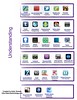 Here’s a lovely idea from Kelly Tenkely: a whole load of iPad apps classified according to Bloom’s taxonomy. I’ve had a quick look, and my conclusions are as follows:
Technology & Learning Editor Kevin Hogan Interviewed
 I had the pleasure of meeting up with Kevin Hogan again at BETT this year. Kevin is the Editor of Technology and Learning, which is a good magazine, a great website, and a brilliant blog and a new international blog. In this short video he talks about BETT, and the differences between educational technology in the USA and the UK, as well as his plans for the magazine.
4 Reasons that the ICT Programme of Study “had” to go
 The fate of the ICT Programme of Study could have been predicted accurately long before Judge Gove donned his black cap and passed the death sentence. After several years of what might be justly described as a “war of attrition”, the weight of the “evidence”, such as it is, made such an outcome unavoidable.
This article is not, to continue the analogy, meant to be the beginning of an appeal process
The 3D Landscape
 Recent changes in the 3D technology landscape are transforming the way we visualise and interact with 3D data and the real world. 3D applications and technologies have reached a level of maturity that are starting to add a real value to the education sector. Inition brings over 10 years experience of integrating 3D technologies alongside expert consulting and training services. We asked them to outline a few of their examples, from 3D displays through to scanning, 3D printing, motion capture and haptic interfaces.