9 Approaches to assessing Computing and ICT–#8: An Iterative Approach

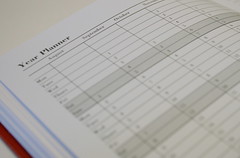
Project 365 #288: 151009 Making PlansThe DfE recently announced the winners of its Assessment Innovation Fund.Over the next week or so I will report on the winners and the descriptions of their approach. These descriptions are more like thumbnail sketches at the moment. I have used them to suggest ways in which they might be adapted for use in assessing ICT and Computing. I hope you find these suggestions useful, or at least a good starting point for your own further work.

In each case I have kept the text of the DfE’s announcement, and then added my thoughts under the heading “Applying this to Computing and ICT”.

Today: Progression planners.

Read More

9 Approaches to assessing Computing and ICT–#7: An Iterative Approach

The DfE recently announced the winners of its Assessment Innovation Fund.Over the next week or so I will report on the winners and the descriptions of their approach. These descriptions are more like thumbnail sketches at the moment. I have used them to suggest ways in which they might be adapted for use in assessing ICT and Computing. I hope you find these suggestions useful, or at least a good starting point for your own further work.

In each case I have kept the text of the DfE’s announcement, and then added my thoughts under the heading “Applying this to Computing and ICT”.

Today: An iterative approach.

Read More

Computer Education Projects Book Update

... big computers!How are teachers preparing for the new Computing curriculum, which is due to start being taught in September 2014?  Some time ago I created an online survey in order to ascertain the answer to this question. Although there have been fewer respondents than I’d hoped for (though probably more than I’d expected), the results are quite interesting. Here is a very brief summary.
Read More

9 Approaches to assessing Computing and ICT–#6: Another Ladder Approach

The DfE recently announced the winners of its Assessment Innovation Fund.Over the next week or so I will report on the winners and the descriptions of their approach. These descriptions are more like thumbnail sketches at the moment. I have used them to suggest ways in which they might be adapted for use in assessing ICT and Computing. I hope you find these suggestions useful, or at least a good starting point for your own further work.

In each case I have kept the text of the DfE’s announcement, and then added my thoughts under the heading “Applying this to Computing and ICT”.

Today: Another Ladder approach.

Read More

Ed Tech determinism and so-called conventional wisdom

I am always suspicious of things that everyone agrees about – mainly because I usually find myself disagreeing. I would not be so arrogant as to believe that everyone else is wrong and I’m right, but I do often think that it would be good to evaluate what is taken as read in light of our personal experience and pedagogical expertise.

Here are just three examples of what I’m talking about.

Read More

9 Approaches to assessing Computing and ICT–#5: A Growth Mindset

The DfE recently announced the winners of its Assessment Innovation Fund.Over the next week or so I will report on the winners and the descriptions of their approach. These descriptions are more like thumbnail sketches at the moment. I have used them to suggest ways in which they might be adapted for use in assessing ICT and Computing. I hope you find these suggestions useful, or at least a good starting point for your own further work.

In each case I have kept the text of the DfE’s announcement, and then added my thoughts under the heading “Applying this to Computing and ICT”.

Today: A Growth Mindset approach.

Read More

9 Approaches to assessing Computing and ICT–#4: A Mastery Approach

The DfE recently announced the winners of its Assessment Innovation Fund.Over the next week or so I will report on the winners and the descriptions of their approach. These descriptions are more like thumbnail sketches at the moment. I have used them to suggest ways in which they might be adapted for use in assessing ICT and Computing. I hope you find these suggestions useful, or at least a good starting point for your own further work.

In each case I have kept the text of the DfE’s announcement, and then added my thoughts under the heading “Applying this to Computing and ICT”.

Today: A Mastery approach.

Read More

9 Approaches to assessing Computing and ICT–#3: A Scoring System

The DfE recently announced the winners of its Assessment Innovation Fund.Over the next week or so I will report on the winners and the descriptions of their approach. These descriptions are more like thumbnail sketches at the moment. I have used them to suggest ways in which they might be adapted for use in assessing ICT and Computing. I hope you find these suggestions useful, or at least a good starting point for your own further work.

In each case I have kept the text of the DfE’s announcement, and then added my thoughts under the heading “Applying this to Computing and ICT”.

Today: A scoring system.

Read More

9 Approaches to assessing Computing and ICT–#2: The ladder

The DfE recently announced the winners of its Assessment Innovation Fund: https://www.gov.uk/government/news/schools-win-funds-to-develop-and-share-new-ways-of-assessing-pupils

Over the next week or so I will report on the winners and the descriptions of their approach. These descriptions are more like thumbnail sketches at the moment. I have used them to suggest ways in which they might be adapted for use in assessing ICT and Computing. I hope you find these suggestions useful, or at least a good starting point for your own further work.

In each case I have kept the text of the DfE’s announcement, and then added my thoughts under the heading “Applying this to Computing and ICT”.

Today: The Ladder.
Read More

9 Approaches to assessing Computing and ICT–#1: Skills Passport

The DfE recently announced the winners of its Assessment Innovation Fund. Over the next week or so I will report on the winners and the descriptions of their approach. These descriptions are more like thumbnail sketches at the moment. I have used them to suggest ways in which they might be adapted for use in assessing ICT and Computing. I hope you find these suggestions useful, or at least a good starting point for your own further work. First one: The Skills Passport
Read More

ICT in Primary Education – a new course for teachers and others

Learning with ComputersProfessor Diana Laurillard has informed me of a new course that is going to be run for teachers and others with an interest in how ICT is being used in primary education in various countries. I think it sounds very interesting. Here’s the official blurb:

This is to announce a new course on ICT in Primary Education, to run as a MOOC (a massive open online course), hosted by the University of London.

Read More

The Story of the Story Wall App: an Apps for Good Success Story

TheStoryWall_iTunesArtworksEmma, 14, describes how she and two friends created the Story Wall app.

The Story Wall was created by me and my classmates Teigan and Joe. We originally came up with the idea to help people with writing stories and how people can get stuck when writing a story. The name was created by thinking how walls and stories are everywhere and how a story could be written on a wall, but the name just came to us and sounded right.

Read More

37 features of outstanding ICT and Computing lessons

Nearly four years ago I published an article called 25 Features of Outstanding ICT Lessons. I thought it was time to update that for the new Computing curriculum. Perhaps unsurprisingly, the original 25 have only needed minor modification, where they have needed modifying at all. Good teaching is, after all, good teaching.

By ‘outstanding’ I do not mean the Ofsted definition of that word, which I feel is somewhat narrow. Nevertheless, I have included Ofsted’s criteria in the list below, with a few comments of my own.

Read More

10 uses for a computer suite

press association markupLots of schools with computer suites are getting rid of them by turning them into ordinary classrooms. The reason is that with mobile technology such as tablets, and initiatives like Bring Your Own Device (BYOD), there is no longer any need for a computer suite. 

But getting rid of a computer suite is just one option: there are several others.

Read More

Coding is not debugging

Sometimes I am not quite sure whether a statement is obvious or not obvious at all. In such cases I try to take the view that if it was that obvious, I wouldn’t need to comment at all. Take the statement “Coding is not debugging”. Of course it isn’t. But to read what some people have written you could be forgiven for thinking that an ability to write good code automatically confers the ability to be good at debugging. Well, like the old Porgy and Bess song has it, it ain’t necessarily so.
Read More

5 principles of assessing computing and ICT

The Questioning RobotoThere are lots of assessment grids and approaches being developed for the new Computing curriculum, which is wonderful. But how do you know which one is right for you? In this article I provide a few principles of assessment which I hope will provide some food for thought. These come partly from a course I’ve been teaching on the subject.

These are general  principles which I have applied to the context of computing and ICT.

Read More

5 Assessment for Learning techniques for ICT or Computing

questionmarks.JPGHere are 5 assessment for learning techniques you may wish to try out. They are generic, but I think they are especially useful in the context of Computing and ICT. As well as my own work and experience, I have drawn on Dylan Wiliam’s book, Embedded Formative Assessment, Black and Wiliam’s Inside the Black Box.
Read More