I submitted my review of this book to Teach Secondary magazine, an educational magazine in the UK. The first review below is what the magazine published. The second one is what I actually wrote! In substantive terms there is little difference between the two, but you may find it interesting to see what the editor altered.
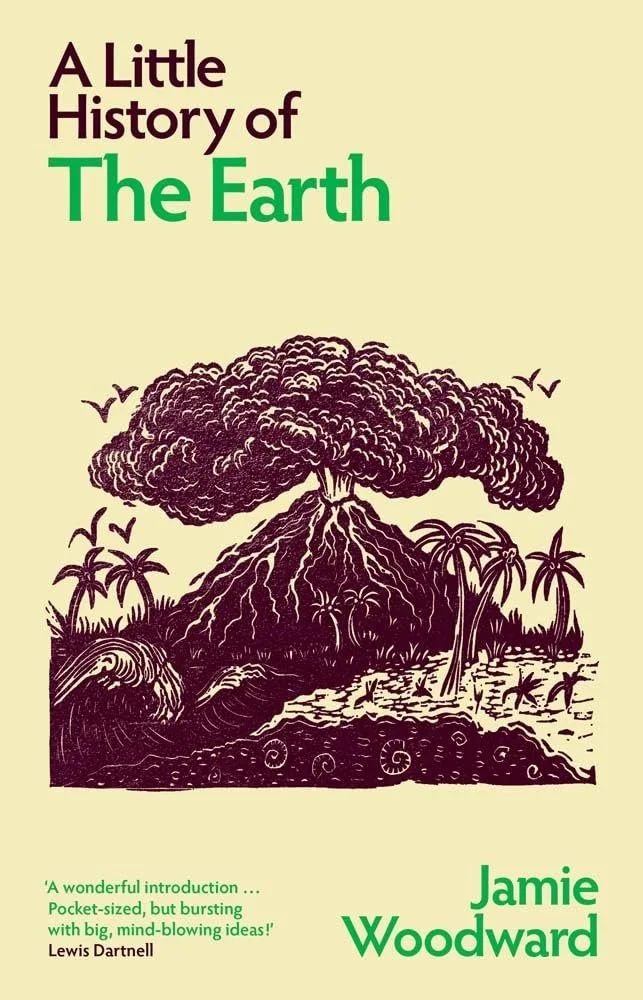
Click the pic to see this book on Amazon (affiliate link)
The published review
A Little History of the Earth
(Woodward, Old Street, £16.99)
When you visit an unfamiliar city, one thing you can do is book yourself on a bus tour. The guide will point out the most important landmarks and where they are in relation to each other, leaving you better prepared to later explore them at your leisure, should you wish. Well, what bus tours do for cities, this book does for geology, covering as it does a vast breadth of material that takes in not just the Earth but also the Moon, as well as Homo sapiens' ongoing search for extraterrestrial life, science fiction, earthquakes, oxygen and even the siting of canals. For all that, it's a very easy read that contains lots of potentially useful material for a range of subjects beyond just geography, including physics, chemistry, biology and even creative writing.
Reviewed by Terry Freedman
bit.ly/Eclecticism
My original review
A Little History of the Earth
(Woodward, Old Street, £16.99)
When you visit a city with which you are unfamiliar, one thing you could do for a quick win is book a ticket on a bus tour. The guide will point out all the most important landmarks, and where they are in relation to each other. Then, at some time in the future, you can, if you wish, spend more time at one or two of the sights.
What the bus tour does for the city, this book does for geology. It covers a vast breadth of material, taking in not only the earth but the moon, the search for extra-terrestrial life, science fiction, earthquakes, oxygen and even the siting of canals. It is a very easy read and in a school context would provide material for geography, physics, chemistry, biology and even creative writing.
Of course, being "a little history" it lacks depth, but should whet the reader's appetite to explore further themselves.