
• Front Page
    • Digital Education
    • Terry Freedman's Books Bulletin
  • RSS
  • Search
    • Welcome
    • The "About" Page
    • Testimonials
    • CV/Resumé
    • My Writing
    • Published articles
  • Corrections Policy
Menu

ICT & Computing in Education

Articles on education technology and related topics
  • Front Page
  • Newsletters
    • Digital Education
    • Terry Freedman's Books Bulletin
  • RSS
  • Search
  • Info
    • Welcome
    • The "About" Page
    • Testimonials
    • CV/Resumé
    • My Writing
    • Published articles
  • Corrections Policy
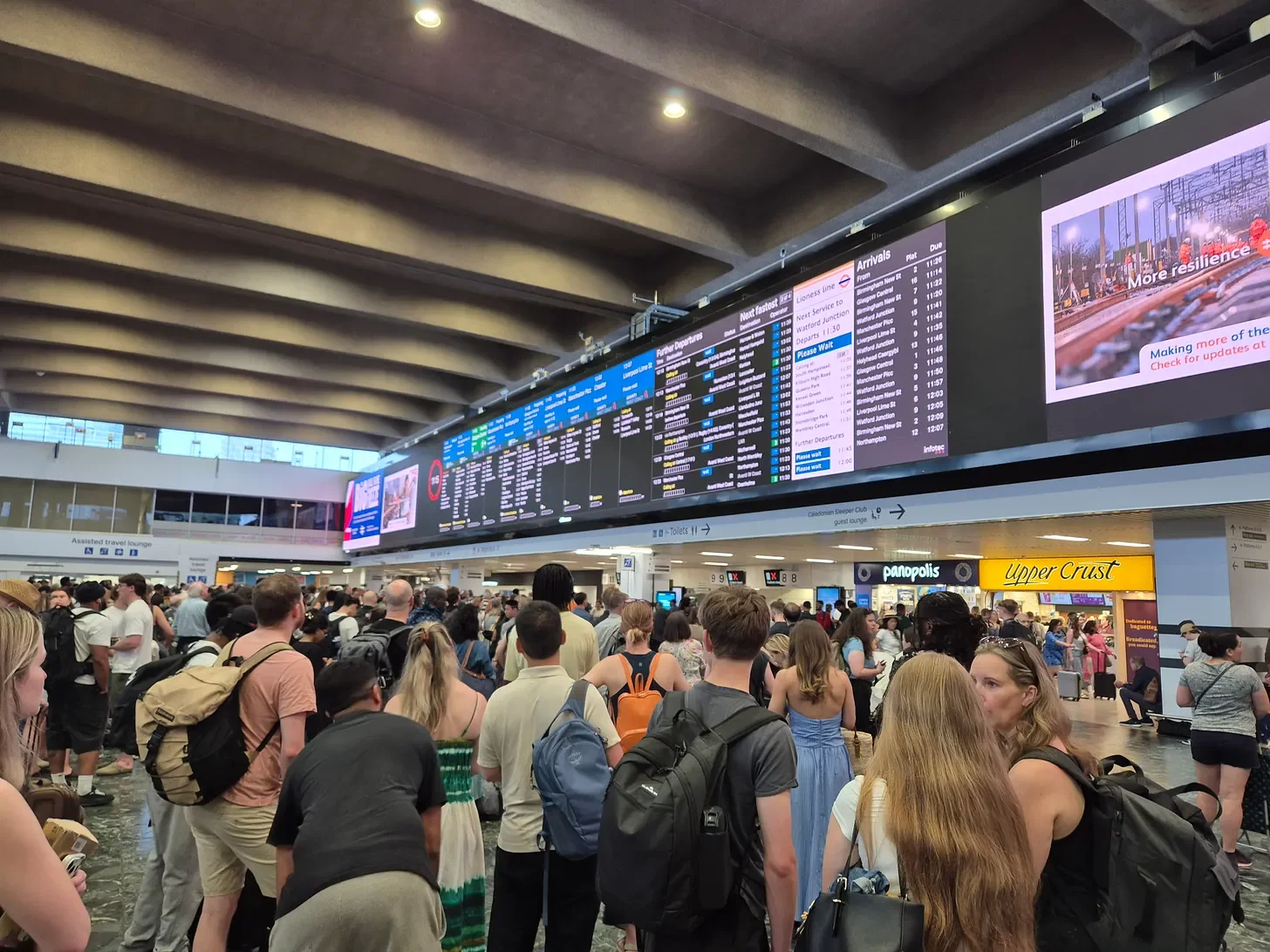
A busy station, by Terry Freedman

A busy station, by Terry Freedman

Useful economic concepts for the edtech co-ordinator: barriers to entry

September 15, 2026

This concept is usually applied in the context of a company attempting to break in to a particular market. For example, an obvious barrier would be the need for a massive investment in equipment, which could take years to recoup. In the context of a school, we can apply the idea to the taste of encouraging teachers to use the computing facilities.

You can think about this from the opposite end, so to speak. In one job interview I attended, I asked the headteacher what HE hoped for as for as computing was concerned. He replied that he wanted people banging on the doors of the computer rooms demanding to be let in.

Think of all the reasons that situation might arise — and why it might not. There has to be a DEMAND for using the facilities, and the SUPPLY has to be available too. Let’s focus on the latter. Why might the facilities not be available?

In schools I’ve worked in I have come across the following situations:

Computer rooms kept locked

Fairly reasonable especially as the toys were kept in the deputy heads’ office, which was open all the time. Except when it wasn’t, which was when they were having a meeting or teaching. In those circumstances, you were kept locked out of the computer rooms for an hour or so. I asked the school office stay if the keys could be kept with them instead, and they agreed. It made sense: there is someone in the school office every day.

Tech know-how

Another barrier to entry might be a lack of expertise. One way to lower that barrier to entry is to make the process of logging on to the school network, and then using it purposefully, very easy. In my case I did the following:-

  • Installed a menu system on the front end so as to make it easy, once you had logged in, to select the task you wished to perform;

  • Wrote a manual that had instructions on how to use one application per page, with one manual per computer;

  • Posted how-to notices around the computer rooms;

  • Stuck a card containing the login details on each computer.

The equipment

Yet another barrier to entry might be unreliability. In one school I joined, nobody would touch the school network. The reason, I discovered, was that it had a habit of turning itself off at random times with no warning. It turned out that one of the cables in the wall was broken. Once that had been fixed, “all” I had to do was convince colleagues that the system was now robust and reliable.

In Leading & Managing Computing & ICT Tags economic concepts, barriers to entry
← Contributing to education technology discussionsBook review: The best writing on mathematics, 2016 →
Recent book reviews
best writing maths.jpg
Book review: The best writing on mathematics, 2016

I think this could be an excellent resource for teachers of mathematics.

Read more →
international short (2).jpg
For your Eng Lit colleagues? The Penguin Book of the International Short Story -- two reviews in one!

I submitted my review of this book to Teach Secondary magazine, an educational magazine in the UK. The first review below is what the magazine published. The second one is what I actually wrote!

Read more →
Turner and Constable (1).jpg
Two reviews in one: Turner and Constable: Rivals and Originals -- art and history

One for your colleagues, perhaps: art, art history, ploitics with a small ‘p’.

Read more →
satire (1).jpg
Two reviews in one: State of Ridicule: A History of Satire in English Literature -- politics, history, English

One for your colleagues, perhaps. Sperrin has provided a wealth of information that can be used to provide a rich experience for students of politics, history and English literature.

Read more →
a little history of maths.jpg
Two reviews in one: A Little History of Mathematics

I submitted my review of this book to Teach Secondary magazine, an educational magazine in the UK. The first review below is what the magazine published. The second one is what I actually wrote! In substantive terms there is little difference between the two, but you may find it interesting to see what the editor altered.

Read more →
The Learning Rainforest Great Teaching in Real Classrooms Great Teaching in Real Classrooms.jpg
Review: The Learning Rainforest: Great Teaching in Real Classrooms

This is a great book for dipping into in order to read about different teaching and assessment strategies, backed up by research.

Read more →
Outstanding Formative Assessment Culture and Practice.jpg
Review: Outstanding Formative Assessment: Culture and Practice

This book contains numerous assessment for learning techniques.

Read more →
New Media in the Classroom Rethinking Primary Literacy.jpg
Review: New Media in the Classroom: Rethinking Primary Literacy

This provides a great deal of information about the different aspects of "literacy” and how digital tools can be brought into the service of literacy in the primary school.

Read more →
Designing the internet of things.jpg
Review: Designing the internet of things

This book takes you through the process of designing connected devices from prototyping to launching.

Read more →
Uneducated.jpg
Quick look: (Un)educated: My Life as a Teacher, and Why You Should Never Become One

“Some of it is laugh-out loud funny, but some of it, about his reference being spiked, made me angry …”

Read more →
Dig+Ed+Banner.jpg

Contact us

Privacy

Cookies

Terms and conditions

This website is powered by Squarespace

(c) Terry Freedman All Rights Reserved