• Front Page
    • Digital Education
    • Terry Freedman's Books Bulletin
  • RSS
  • Search
    • Welcome
    • The "About" Page
    • Testimonials
    • CV/Resumé
    • My Writing
    • Published articles
  • Corrections Policy
Menu

ICT & Computing in Education

Articles on education technology and related topics
  • Front Page
  • Newsletters
    • Digital Education
    • Terry Freedman's Books Bulletin
  • RSS
  • Search
  • Info
    • Welcome
    • The "About" Page
    • Testimonials
    • CV/Resumé
    • My Writing
    • Published articles
  • Corrections Policy
The Homework Excuse Management System, by Terry Freedman

The Homework Excuse Management System, by Terry Freedman

Blast from the past: the homework excuse management system

September 25, 2018

Or, how I eradicated the hassle of dealing kids who don’t do their homework, without resorting to detentions or any other kind of punishment

One year, I managed to ensure that nobody handed in their homework late, or not at all. I did so by the simple expedient of handing out a list of excuses at the start of the year, and telling my classes that if they didn't feel like doing their homework on occasion to simply let me know which number excuse they'd like to use. I would note that down in my markbook, and they needed to keep a record as well so that they didn't inadvertently use the same excuse twice.

There’s an app for that…

The ruse worked so well that I thought I'd digitise the system. The screenshot shows the Excel spreadsheet version. If an excuse was entered twice for the same pupil, a sad face would appear.

Behind the scenes were some quite complicated formulae, which if anyone is interested I'd be happy to share (if I can find them). The astonishing thing was that I was able to make the spreadsheet work without using any programming (in those days I employed Visual Basic for Applications a lot).

Fame at last!

Somehow or other, HEMS came to the attention of an education writer for The Guardian newspaper. He wrote something along the lines of: "And who can doubt the brilliance of the Homework Excuse Management System?!"

Lessons learnt

Very nice, to be sure, but there's a larger point to be made here I think. I developed HEMS for a laugh really. I know it's de rigeur to encourage pupils to find worthy problems that need sorting out, and to get on with sorting them (I advocate that myself). But in my opinion there's nothing wrong in creating or finding frivolous 'problems' that challenge pupils to really think about how best to solve them.

In the case of the HEMS, I could have used VBA, but I wanted to see if I could achieve the same result with no programming at all. It was a good exercise, because it really helped me to learn about a few kinds of formula and functions that I hadn't encountered before, and required a fair bit of research at the time.

Another advantage was that once I had worked out how to make the HEMS work, I was able to adapt and apply the formulae I used to other, more serious problems.

A great illustration of the fact that problem-solving, no matter how unimportant the problem, is never wasted.

This article first appeared in my free newsletter, Digital Education. Do sign up for tips, hints, news, views and reviews: Digital Education.

More spreadsheet-related articles
byway.jpg
July 28, 2025
The Value of Stating the Obvious
July 28, 2025

Do advertisers know something we don’t?

Read more →
July 28, 2025
Using spreadsheets or Python to process words
October 4, 2023
Using spreadsheets or Python to process words
October 4, 2023

A couple of people and I started to discuss how we might use technology to process a block of text.

Read more →
October 4, 2023
Use a spreadsheet for literary criticism: it's more accurate (Updated)
March 14, 2022
Use a spreadsheet for literary criticism: it's more accurate (Updated)
March 14, 2022

It seems to me that if you’re going to encourage students to use computer programming in literature studies, one very worthwhile project would be to get them to create a random book review or literary essay generator.

Read more →
March 14, 2022
Use a spreadsheet for literary criticism: it's more accurate
November 21, 2021
Use a spreadsheet for literary criticism: it's more accurate
November 21, 2021

If book blurb writers had any sense, they wouldn’t put wordy descriptions on the back cover of books. They would put a graph there instead.

Read more →
November 21, 2021
Introducing kids to programming via a spreadsheet sweet shop
September 15, 2021
Introducing kids to programming via a spreadsheet sweet shop
September 15, 2021

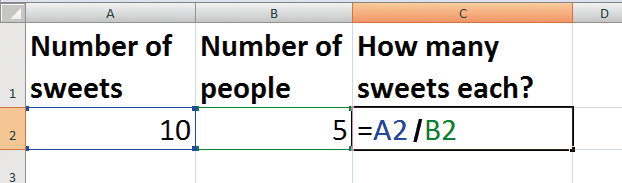
Spreadsheets are dead, right? Wrong! Not only are they a great tool for teaching programming concepts, they can easily be addressed under the Computing programme of study.

Read more →
September 15, 2021
Book review: 100 Top Tips - Microsoft Excel, by Sean McManus
September 3, 2020
Book review: 100 Top Tips - Microsoft Excel, by Sean McManus
September 3, 2020

Could this book of 100 top tips for using Excel benefit heads of department or subject leaders?

Read more →
September 3, 2020
How to see the trend in students' grades at a glance
June 15, 2020
How to see the trend in students' grades at a glance
June 15, 2020

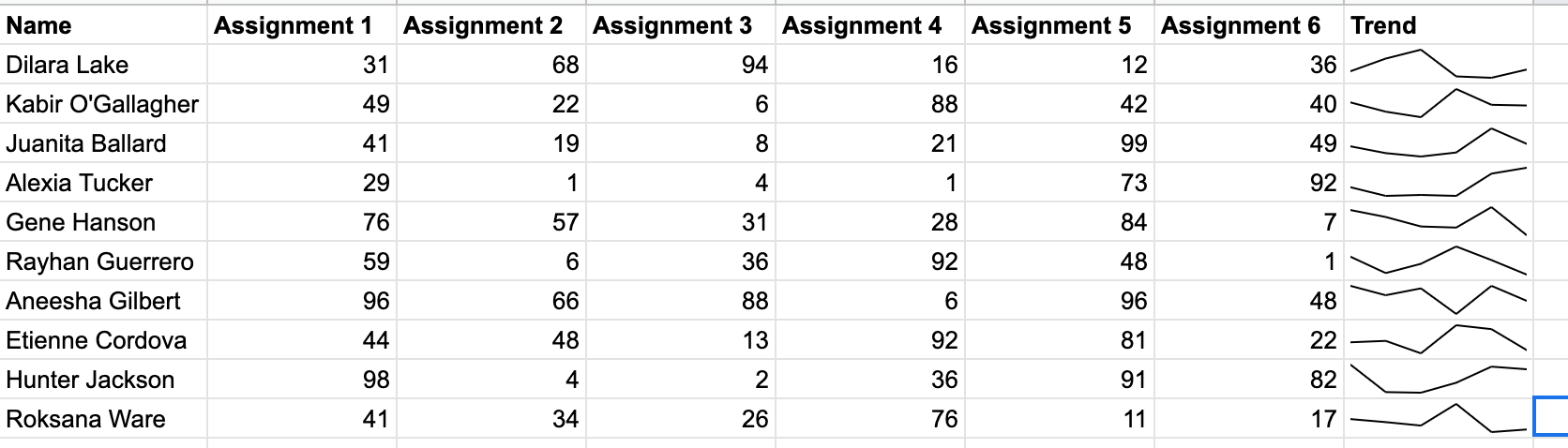
Updated! Here’s a little-known function in Google Sheets which gives you an in-cell graph. Handy for displaying trends in students' grades at a glance.

Read more →
June 15, 2020
How teachers can use the tick box in Google Sheets
June 10, 2020
How teachers can use the tick box in Google Sheets
June 10, 2020

Google sheets has a tick box feature. Here are some ways you can make use of it.

Read more →
June 10, 2020
A self-marking spreadsheet UPDATED
October 21, 2019
A self-marking spreadsheet UPDATED
October 21, 2019

I like a challenge so I thought I’d try to create a self-marking spreadsheet in Excel. I was inspired to have a go at this by someone called Lee Rymill, who uploaded a self-marking spreadsheet to the CAS resources area. However, I wanted to take it a few steps further, using the Visual Basic for Applications programming language.

Read more →
October 21, 2019
Useless utilities, pointless programs -- and why we should encourage kids to create them
October 11, 2019
Useless utilities, pointless programs -- and why we should encourage kids to create them
October 11, 2019

We should encourage pupils to write useless bits of code. Here’s why.

Read more →
October 11, 2019


In Blast from the past, On the lighter side, Using and Teaching Computing & ICT Tags spreadsheet, HEMS, homework
← 14 ways to keep on being a learnerBombarding colleagues with research results regarding ed tech doesn't work →
Recent book reviews
When.jpg
Review: When: The Scientific Secrets of Perfect Timing

Hopefully, neither you nor I will ever find ourselves in court, undergoing a medical procedure, or taking an important exam.

Read more →
finding fibonacci.jpg
Review: Finding Fibonacci: The Quest to Rediscover the Forgotten Mathematical Genius Who Changed the World

Finding Fibonacci is a memoir of the authors’ quest to find out about Fibonacci.

Read more →
The Teachers' Standards in Primary Schools.jpg
Quick look: The Teachers' Standards in Primary Schools

This is very well set out. It takes each standard, and gives you ideas on how to achieve it, and what success in this context looks like.

Read more →
How Computer Games Help Children learn.jpg
Quick look: How Computer Games Help Children learn

When I was teaching Econnures I realised that I could have taught quite a chunk of the synabus if I'd been able to run Sim City on the school network.

Read more →
Reinventing Project-Based learning.jpg
Quick look: Reinventing Project-Based Learning

I can verify from first hand experience that PBL kept students highly engaged, and helped them to develop skills such as working with others and independent research.

Read more →
The human touch.jpg
Quick look: The Human Touch

Although this book is published by the BCS, the Chartered Institute for IT, the focus is not on IT at all.

Read more →
Better Living through science.jpg
Quick look: Better Living through science

I have often thought that I would have been much more interested in science at school, and been much more successful at it, had the teachers taught us anything of practical value.

Read more →
Tubes.jpg
Quick look: Tubes: Behind the scenes at the internet

We are all so accustomed to using the internet, searching the world wide web — "going online" — that most of us most of the time probably do not stop to consider the question: yes, but where exactly is it?

Read more →
profits, prophets.jpg
Quick look: Profits, Prophets, Coaches and Kings: (When) do leaders make a difference?

I have somewhat dichotomous views of this question of whether leaders make a difference, or much of a difference.

Read more →
power up.jpg
Review: Power Up, by Matthew Lane

This book looks at the maths concepts — and, to some extent, the physics concepts — hidden in popular video games.

Read more →
Dig+Ed+Banner.jpg

Contact us

Privacy

Cookies

Terms and conditions

This website is powered by Squarespace

(c) Terry Freedman All Rights Reserved