• Front Page
    • Digital Education
    • Terry Freedman's Books Bulletin
  • RSS
  • Search
    • Welcome
    • The "About" Page
    • Testimonials
    • CV/Resumé
    • My Writing
    • Published articles
  • Corrections Policy
Menu

ICT & Computing in Education

Articles on education technology and related topics
  • Front Page
  • Newsletters
    • Digital Education
    • Terry Freedman's Books Bulletin
  • RSS
  • Search
  • Info
    • Welcome
    • The "About" Page
    • Testimonials
    • CV/Resumé
    • My Writing
    • Published articles
  • Corrections Policy
Digital News Report 2019 from Reuters

Digital News Report 2019 from Reuters

Notes from the desktop: digital news report

June 20, 2019

Digital news

The 2019 report on Digital News from the Reuters Institute is now available. It’s quite timely — for me, at least, because the next issue of Digital Education will feature some information about fake news. The report uses the term ‘misinformation’ rather than fake news; I suspect that it’s because not all misinformation is deliberate.

I haven’t had the chance to read the report (come on, I only received the email about it half an hour ago!), but it contains some interesting findings, such as:

Concern about misinformation and disinformation remains high despite efforts by platforms and publishers to build public confidence. In Brazil 85% agree with a statement that they are worried about what is real and fake on the internet. Concern is also high in the UK (70%) and US (67%), but much lower in Germany (38%) and the Netherlands (31%).

The smartphone continues to grow in importance for news, with two-thirds (66%) now using the device to access news weekly (+4pp). Mobile news aggregators like Apple News and Upday are becoming a more significant force. Apple News in the United States now reaches more iPhone users (27%) than the Washington Post (23%).

There are some interesting statistics as well about which media are best for breaking the news and which are best for explaining it. Also, subscription models: have they reached saturation point?

To download the report, go here: Digital News Report 2019 (pdf)

Related articles
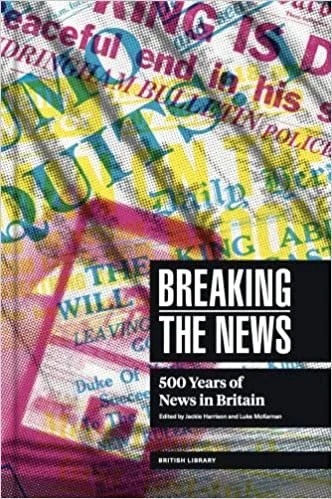
Review: Breaking the news -- exhibtion
December 16, 2022
Review: Breaking the news -- exhibtion
December 16, 2022

It is easy to believe that ‘fake news’ is a modern phenomenon, brought about by social media and promulgated by politicians. Yet as the British Library’s event, ‘Breaking the News’ exhibition demonstrated, fake news – or that unforgettable phrase ‘alternative facts’ – have been features of news reporting for at least 500 years.

Read more →
December 16, 2022
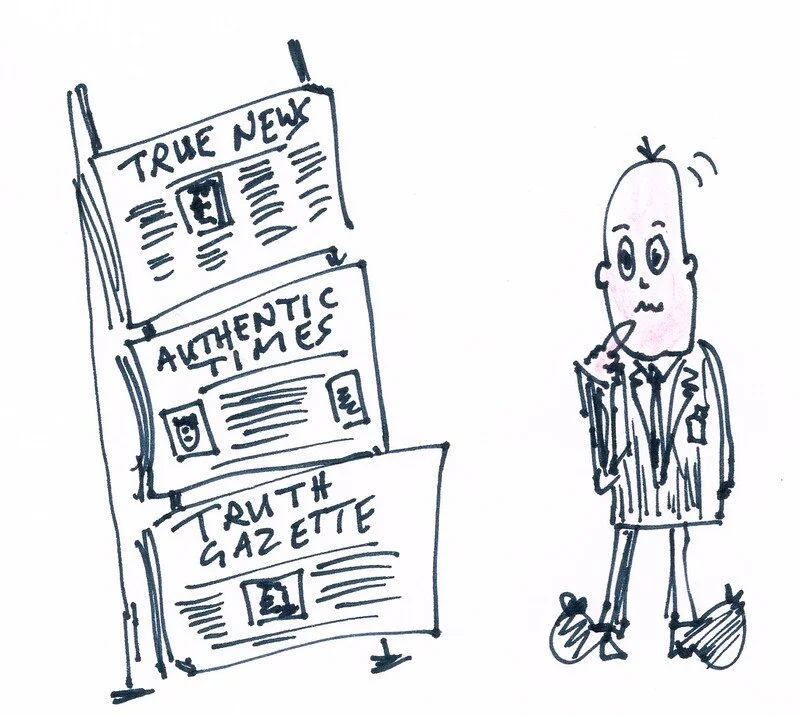
Fake news?
November 24, 2022
Fake news?
November 24, 2022

I’ve compiled a number of reviews of non-fiction books that either deal with helping people detect untruths (such as in so-called scientific research) or presenting something as true when, in fact, it isn’t.

Read more →
November 24, 2022
Fake news and media literacy
December 1, 2021
Fake news and media literacy
December 1, 2021

I like to try and give people the benefit of the doubt, but is that always the right approach? Ambrose Bierce defined a cynic as someone who sees things as they are, and not as they ought to be.

Read more →
December 1, 2021
16 articles and resources about fake news
December 21, 2020
16 articles and resources about fake news
December 21, 2020

The following links were included in a recent issue of my newsletter, Digital Education.

Read more →
December 21, 2020
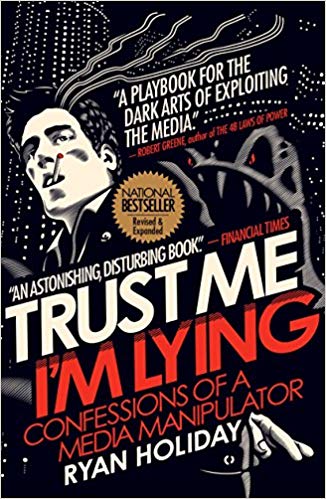
On this day #5: Review of Trust Me, I'm Lying
October 14, 2020
On this day #5: Review of Trust Me, I'm Lying
October 14, 2020

On 14 October 2019 I reviewed Trust Me, I’m Lying. It’s a book about how bloggers and mainstream media can be manipulated. It’s pretty sobering stuff.

Read more →
October 14, 2020
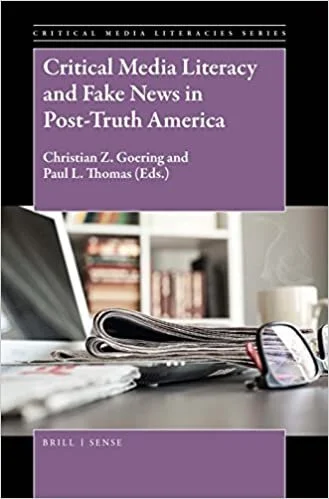
Book Review: Critical Media Literacy and Fake News in Post-Truth America
March 23, 2020
Book Review: Critical Media Literacy and Fake News in Post-Truth America
March 23, 2020

Don’t let the country-specific title put you off. This is a very useful (and readable) book.

Read more →
March 23, 2020
6 articles and 13 resources about fake news
January 9, 2020
6 articles and 13 resources about fake news
January 9, 2020

Here are some interesting articles, plus guides on how to check news on the internet, including photos and videos. Plus classroom activities.

Read more →
January 9, 2020
Review: Trust me, I'm lying
October 14, 2019
Review: Trust me, I'm lying
October 14, 2019

In TMIL, Holiday demonstrates how easy it is to manipulate the news. A must-read for teachers of media or digital literacy.

Read more →
October 14, 2019
Review of Newsguard
October 7, 2019
Review of Newsguard
October 7, 2019

Newsguard is a service that rates websites for honesty, transparency and trustworthiness. It evaluates websites against several criteria, such as whether information is gathered and presented responsibly. A browser extension will enable you to see at a glance whether or a not a site they have evaluated is trustworthy.

Read more →
October 7, 2019
More fake news
October 1, 2019
More fake news
October 1, 2019

Since mentioning that I am working on a special fake news edition of Digital Education, I have come across a few more brilliant resources.

Read more →
October 1, 2019


In News & views, Research Tags Reuters Institute, Digital News Report, fake news
← 7 Ways of Making the ICT and Computing facilities More attractive to useNew prize draw, and updated information on our competitions →
Recent book reviews
a little history of the earth.jpg
One for your Geography colleagues perhaps? Review: A Little History of the Earth -- two reviews in one!
Read more →
a word for all seasons.jpg
For your English colleagues: A Word for all Seasons -- two reviews in one!
Read more →
the mending.jpg
For your maths colleagues: The Mending of Broken Bones: A Modern Guide to Classical Algebra -- two reviews in one!

I submitted my review of this book to Teach Secondary magazine, an educational magazine in the UK. The first review below is what the magazine published. The second one is what I actually wrote! In substantive terms there is little difference between the two, but you may find it interesting to see what the editor altered.

Read more →
the worst exhibition.jpg
For your History colleagues: The Worst Exhibition in the World: Degenerate Art, 1937 -- two reviews in one!

I submitted my review of this book to Teach Secondary magazine, an educational magazine in the UK. The first review below is what the magazine published. The second one is what I actually wrote! In substantive terms there is little difference between the two, but you may find it interesting to see what the editor altered.

Read more →
History lesson, by Terry Freedman.jpg
Is The computing Curriculum Too Masculine? Revisited 16 years later!

One of the apparently insoluble problems of the age is how do you encourage more girls to take up Computing? I think a lot can be done, and have done so myself, but I wonder how far a lot of the effort fails to get to the heart of the issue, which could be the curriculum itself, the way it is taught, or a combination of the two?

Read more →
best writing maths.jpg
Book review: The best writing on mathematics, 2016

I think this could be an excellent resource for teachers of mathematics.

Read more →
international short (2).jpg
For your Eng Lit colleagues? The Penguin Book of the International Short Story -- two reviews in one!

I submitted my review of this book to Teach Secondary magazine, an educational magazine in the UK. The first review below is what the magazine published. The second one is what I actually wrote!

Read more →
Turner and Constable (1).jpg
Two reviews in one: Turner and Constable: Rivals and Originals -- art and history

One for your colleagues, perhaps: art, art history, ploitics with a small ‘p’.

Read more →
satire (1).jpg
Two reviews in one: State of Ridicule: A History of Satire in English Literature -- politics, history, English

One for your colleagues, perhaps. Sperrin has provided a wealth of information that can be used to provide a rich experience for students of politics, history and English literature.

Read more →
a little history of maths.jpg
Two reviews in one: A Little History of Mathematics

I submitted my review of this book to Teach Secondary magazine, an educational magazine in the UK. The first review below is what the magazine published. The second one is what I actually wrote! In substantive terms there is little difference between the two, but you may find it interesting to see what the editor altered.

Read more →
Dig+Ed+Banner.jpg

Contact us

Privacy

Cookies

Terms and conditions

This website is powered by Squarespace

(c) Terry Freedman All Rights Reserved