
• Front Page
  • Search
    • Digital Education
    • Terry Freedman's Books Bulletin
  • RSS
    • Welcome
    • The "About" Page
    • Testimonials
    • CV/Resumé
    • My Writing
    • Published articles
  • Corrections Policy
Menu

ICT & Computing in Education

Articles on education technology and related topics
  • Front Page
  • Search
  • Newsletters
    • Digital Education
    • Terry Freedman's Books Bulletin
  • RSS
  • Info
    • Welcome
    • The "About" Page
    • Testimonials
    • CV/Resumé
    • My Writing
    • Published articles
  • Corrections Policy
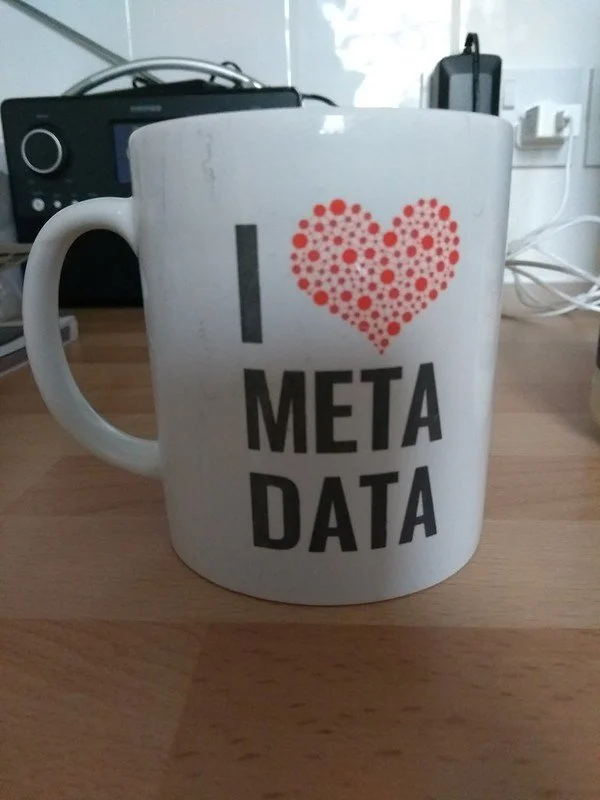
metadata mug, by Terry Freedman

metadata mug, photo by Terry Freedman

My grim and distant techie past: the uni years, part 1 (updated)

February 20, 2026

It’s amazing how technology has changed over the years. I was thinking about this recently, in relation to my mother. She lived for 91 years, and during that time she witnessed cars becoming ubiquitous, the invention and expansion of television, the development of video and home video recording, cheap flights, fast trains… The list goes on and on.

I am not old enough to experienced quite as many dramatic changes as that, but as far as the world of education is concerned, there have been quite a few. I thought it might be interesting to try and document them from a personal point of view.

Oh, and just for the record, I am not writing these “technobiographical” articles in a spirit of nostalgia. As I have said before, as far as I’m concerned, the best thing about the past is that it’s the past. The technology we have today is wonderful; who would want to return to an earlier era?

I have documented my pre-video days in I was a teenage geek, so you may wish to read that first.

My university years are in three parts:

  • my first degree

  • my post-graduate certificate of teaching, and

  • my Masters degree

My first degree

Not much technology to speak of here, I’m afraid. The nearest I came to anything electronic were a photocopier and a calculator that my girlfriend had.

The photocopier produced very shiny, grubby-looking copies, laboriously slowly – around 30 or 40 seconds per page. It also cost 10 pence a sheet which would be roughly £1.79 today. (Such calculations are fraught with difficulties: they take into account inflation, but not purchasing power. Nevertheless, using a website, and http://www.thisismoney.co.uk/money/bills/article-1633409/Historic-inflation-calculator-value-money-changed-1900.html, I was furnished with very similar results.)

That meant you would only photocopy something if it was not only crucial but far too difficult or time-consuming to reproduce by hand, eg a complicated graph or table. We students had to be very good at summarising textbook chapters and journal articles!

As for that calculator, my girlfriend’s father had made it himself from an electronics kit costing £5. That works out to just under £90 in 2013 prices.

We students had to be very good at mental arithmetic too!

I do vaguely recall that some tutors used overhead projectors, but mainly it was lecturing or, if one of them was really cutting edge, “chalk-n-talk”.

It was all pretty grim, but of course, at the time we didn’t think it was grim: it was just normal.

But my post-graduate certificate of teaching (PGCE) year was much better….

See part 2 for that.
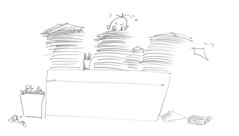
Paperless office?

Your newsletter editor is hard at work sifting through the submissions for Digital Education, the free newsletter for education professionals. Have you subscribed yet?

Read more about it, and subscribe, on the Newsletter page of the ICT in Education website.

We use a double opt-in system, and you won’t get spammed.

In Autobiography Tags old technology, technology, university
My grim and distant techie past: the uni years, part 2 (updated) →
Recent book reviews
polish.jpg
Need a break? This book of short stories could be just the ticket!

The 39 stories in this collection span a hundred years, during which Polish society underwent seismic political change several times over.

Read More →
digital culture shock.jpg
Review: Digital Culture Shock: Who Creates Technology and Why This Matters

An interesting look at how differently societies across the globe view and use technlogogy.

Read More →
the idea machine.jpg
Review: The Idea Machine: How Books Built Our World and Shape Our Future

The written word has endured for millennia, and herein you'll discover why.

Read More →
craftland.jpg
Review: Craftland: A Journey Through Britain's Lost Arts and Vanishing Trades

A book that offers a glimpse into the way traditional crafts were practised before the Industrial Revolution.

Read More →
digital culture shock.jpg
Quick look: Digital Culture Shock: Who Creates Technology and Why This Matters

Chapters look at how technology is used around the world, online communities, and building a culturally just infrastucture, amongst other topics.

Read More →
Artificially Gifted Notes from a Post-Genius World.jpg
Quick look: Artificially Gifted: Notes from a Post-Genius World

The author, Mechelle Gilford, explores how AI may render our usual way of interpreting the concept of “gifted” obsolete.

Read More →
dr bot.jpg
Quick look: Dr. Bot: Why Doctors Can Fail Us―and How AI Could Save Lives

Dr Bot discusses something I hadn’t really considered…

Read More →
seven lessons 2.jpg
Review: Seven Brief Lessons on Physics: Anniversary Edition

Rovelli draws readers into his world by describing the development of theories that scientists have posited to try and explain our world and the universe beyond.

Read More →
dear data.jpg
Review: Dear Data

The authors spent a year sending each other postcards on a different theme each week, with pictorial representations of the data they had collected.

Read More →
Blueprints.jpg
Review: Blueprints: How mathematics shapes creativity

What place might Blueprints merit on a teacher’s bookshelves?

Read More →
Dig+Ed+Banner.jpg

Contact us

Privacy

Cookies

Terms and conditions

This website is powered by Squarespace

(c) Terry Freedman All Rights Reserved